
When we use a simile, we say that something is like — but not identical to — something else. So the writers of Gilgamesh describe the hungry gods swarming around the ark after the flood “like flies”. Like. But also not like.
Poetry and Prayer are sometimes compared to each other fruitfully, and other times the comparison falls short. Most prayers are addressed to a ‘you’; some poems are too, but in a different way. Many prayers make use of a received syntax to say something old in a new way, with, perhaps, a recognizable object of desire. Many poems seek to use surprising syntax to say something different.
This workshop will examine prayers and poems, exploring form, desire and address, and employ these explorations in daily creative writing prompts. The outcome will depend on the writer: poems, prayers, liturgies, spells, anti-liturgies, curses, blessings, invectives and invitations.
The Collegeville Institute will cover all workshop fees, room and board, as well as most travel expenses to and from the workshop within the continental United States. International travel costs, and travel from Hawaii and Alaska, may be shared between the Collegeville Institute and the workshop participant. Those who join the workshop will be expected to reside at the Collegeville Institute throughout the entire workshop.
Leader Bio: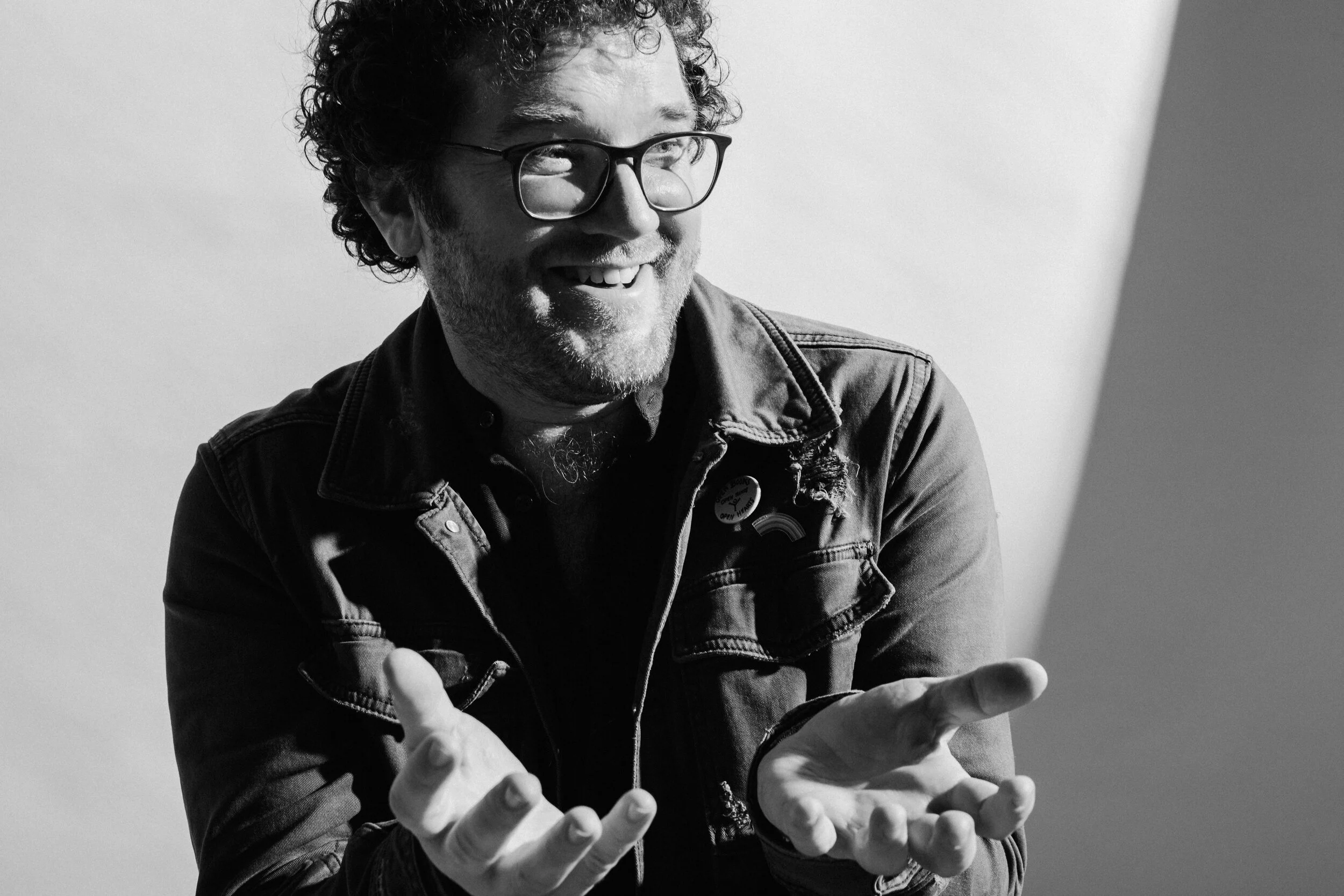 Pádraig Ó Tuama is a poet and theologian whose work centers around themes of language, power, conflict and religion. Working fluently on the page and in public, he is a compelling poet and skilled speaker, teacher and group worker. He presents Poetry Unbound with On Being Studios. From 2014-2019 he was the leader of the Corrymeela Community, Ireland’s oldest peace and reconciliation community. With undergraduate and postgraduate degrees in theology, multiple professional qualifications in conflict mediation (specializing in groups), he also holds a PhD (Poetry & Theology) from the University of Glasgow. For the Autumn terms of 2024-28, he is a visiting scholar at the Center for Cooperation and Conflict Resolution at Columbia University.
When BBC journalist William Crawley introduced Pádraig on the stage to deliver a TEDx talk on Story, Crawley said, “He’s probably the best public speaker I know.” Profiling Ó Tuama in The New Yorker, journalist and poet Eliza Grizwold wrote “Poetry, for him, is the language the heart speaks not when it reaches for some externalized divinity, but when it seeks to understand itself.”
(Photo Credit – Trevor Brady)
